
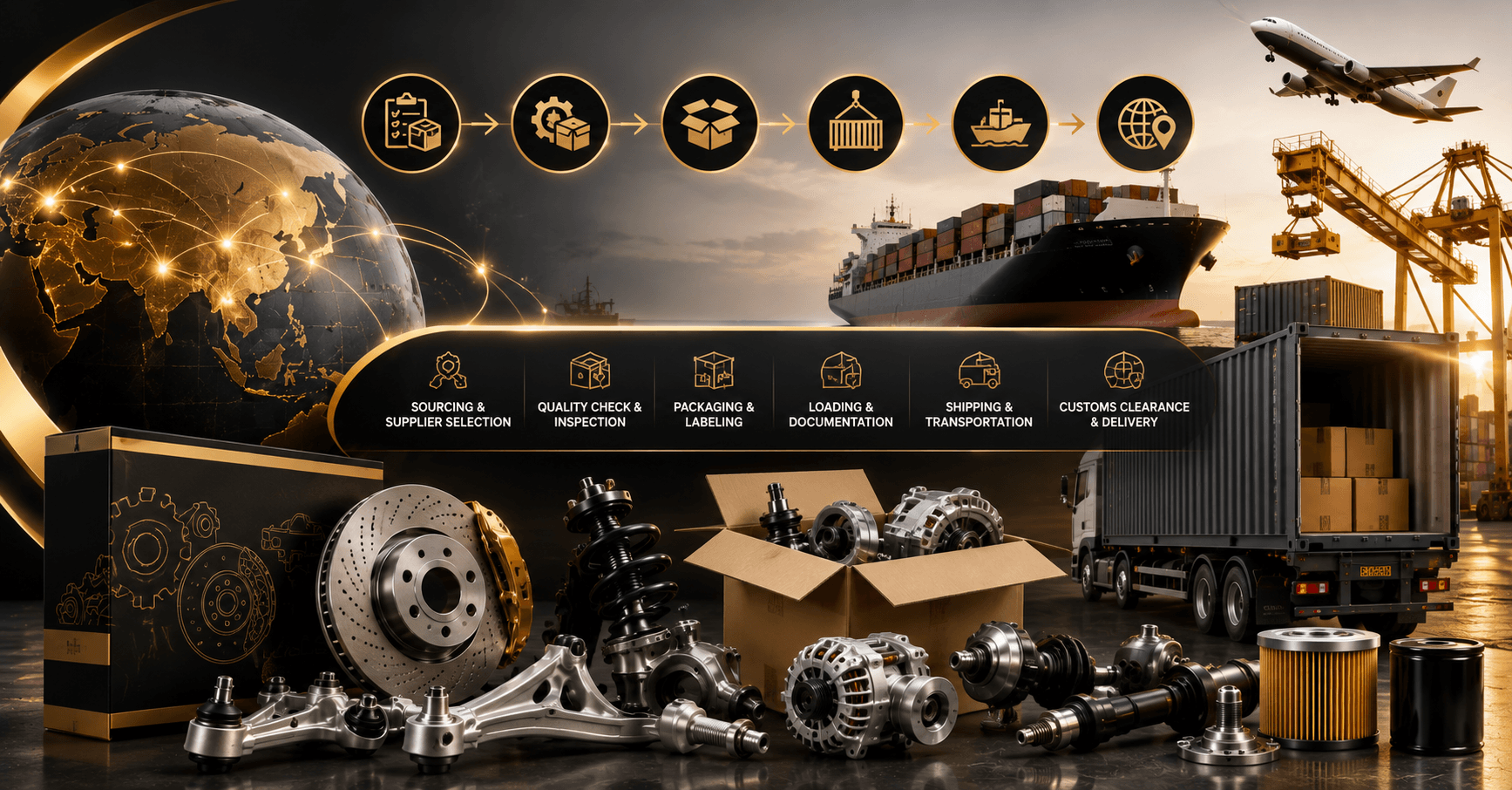
Introduction
The automotive spare parts industry is a crucial player in supporting vehicle manufacturing distribution wholesale, and vehicle repair businesses worldwide. Millions of automotive components are shipped daily to different countries, which help in meeting the increasing global needs. Even so, exporting auto spare parts is far more complicated than merely shipping products from one country to another. The major export operations include planning, supplier selection, quality checking, secure packaging, document preparation, logistics and customer support. Examining each stage of an export process allows the importer to make fair decisions, escape unnecessary delays and establish long-term trusted exporter partnerships. This article describes the entire automotive spare parts export process beginning from initial inquiry to final delivery.
Table of Contents
- Understanding Customer Requirements
- Inquiry
- Quotation
- Supplier Selection
- Quality Inspection
- Packaging
- Export Documentation
- Container Loading
- Shipping
- Delivery
- Customer Support
- Why Choose SAR Components
- FAQs
Understanding Customer Requirements
Every successful export begins with understanding the buyer’s needs. Before preparing a quotation, exporters gather important information such as:
- Product specifications
- Vehicle make and model
- OEM or aftermarket requirements
- Quantity required
- Destination country
- Shipping preference
- Delivery timeline
Understanding these details helps ensure that the customer receives products that match their technical and commercial requirements.
Step 1: Inquiry
Export procedure gets underway after the importer calls the automotive spare parts exporter with an inquiry. Usually, buyers disclose details like:
- Names of products
- Parts numbers
- Images or physical examples of the products
- Quantity needed
- Port of destination
- Exporter’s preferred method of shipping
Senior exporter will react promptly, clarify any misunderstanding, and take steps to check how the goods can be sourced.
Step 2: Quotation
Upon acceptance of the inquiry, the exporter prepares a detailed quotation. A professional quotation usually includes:
- List of product specifications
- Unit price
- Minimum Order Quantity (MOQ)
- Payment terms
- Delivery timeline
- Terms of shipment
- Packaging details
- Validity period
Transparent and clear pricing, so the buyer can buy without doubt but with clarity about the future purchase.
Step 3: Supplier Selection
One of the crucial phases in exporting an item is selecting the suitable manufacturing partner. Confident exporters have partnerships with dependable manufacturers who provide:
- Everlasting product quality
- Up-to-date production plants
- Industry knowledge
- On-time production
- Attractive prices
- Complying with international quality standards
Good supplier bonds contribute to a constant supply and quality product performance.
Step 4: Quality Inspection
One of the most important steps in ensuring quality is performing quality control inspections before the goods are shipped. Experienced export companies don’t just rely on one time quality tests but rather they do multiple tests and inspections during the manufacture of the products. Some of the usually performed quality checks are:
- Checking the raw material
- Measuring the dimensions for accuracy
- Checking the surface finish
- Testing for the functionality
- Testing for durability
- Last visual inspection
Step 5: Packaging
Correct packaging matters a lot in protecting automotive spare parts against damage during handling and storage. The use of materials is totally at the discretion of the product as the exporter may decide to:
- Wrap the product individually
- Use bubble wrap
- Pack in moisture-resistant materials
- Put in corrugated cartons
- Wooden pallets
- Label the products with export-grade labels
Packaging that is well planned and executed not only lessens the chance of damage while in transit but also helps deliver the products to the customers in top condition.
Step 6: Export Documentation
The export process involves quite a few documents all of which need to be correct and complete. In general, what comes next documentation should be available:
- Commercial Invoice
- Packing List
- Bill of Lading
- Certificate of Origin
- Export Declaration
- Insurance Documents
- Inspection Certificates (where applicable)
To avoid customs delays and have international trade run smoothly, adequate documentation is a must.
Step 7: Container Loading
Once inspection and paperwork have been taken care of, the goods are put inside shipping containers. The main elements of professional loading are:
- Correct distribution of weight
- Stabilizing pallets
- If required cushioning products
- Control of humidity levels
- Properly marking of goods
- Sealing container
Gentle loading decreases product displacement in transit and also shields products from damage.
Step 8: Shipping
Afterward, the shipment is transported to its destination country using the partners in logistics that the company trusts. Meeting customer specifications, the delivery may happen by:
- Sea Freight
- Air Freight
- Multimodal Transport
During the entire period of shipping, buyers get information about the status of the shipment through tracking which gives them total visibility.
Step 9: Delivery
Once the customs clearance is done, the shipment arrives at the customer’s warehouse or any other location they might have designated. This is what is involved in a successful delivery:
- Arrival at the scheduled time
- Entire shipment present
- All necessary paperwork
- Good condition of the products
- Simple unloading
Delivery at the right time is what helps customers to keep their stocks at the desired levels and even avoid interruption to their business operations.
Step 10: Customer Support
The connection between exporter and importer does not end with the delivery of goods. Dependable automotive exporters offer continued support for their clients in various ways like:
- Help tracking shipment
- Consultation for technical issues
- Sharing product details
- Providing warranty services
- Responding promptly to customer questions
- Facilitating the ordering process for repeat customers
Why Choose SAR Components?
At SAR Components, we realize that exporting successfully is not only about making automotive parts available but also it is a matter of accuracy, openness, and reliable service at every step of the way. We are strong in this areas:
- Being knowledgeable about the industry
- Having reliable manufacturing sources
- Implementing very strict quality checks
- Packing for export with high level of security
- Preparing the right and complete documents
- Handling international shipping without faults
- Giving extra care and attention to customers
- Delivering on time to various parts of the world
On top of everything, if you are a distributor, wholesaler, or importer, SAR Components will continue its dedication to offering export done in the easiest possible way, worth your trust and the highest standards of quality and professionalism.
Conclusion
Carrying out the export of auto parts is a well-organized and complex process that necessitates paying incresed attention to detail, high quality standards, and efficient logistics setup. Each phase from the first query to complete handover is vital in making sure buyers are happy and trade across borders is successful.
When joining forces with a proficient exporter such as SAR Components, one can ease the export procedure, minimize exposure to business risks, and establish dependable supply chains for sustained development.
Frequently Asked Questions (FAQs)
1. What is the first step in exporting automotive spare parts?
The first step of the selling process is. to carry out an inquiry where the buyer communicates the details of the product like the type of product quantity destination, etc.
2. Why is quality inspection important before export?
Quality checking guarantees that the goods adhere to the standards, and this measure can also lessen the chances of defective goods, return, and warranty claims.
3. What documents are required for exporting automotive spare parts?
Here are the most widely recognised documents for export: Commercial Invoice, Packing List, Bill of Lading, Certificate of Origin, Export Declaration, and documents related to insurance.
4. How are automotive spare parts packaged for international shipping?
Normally, suitable packing materials are used which include protective wrapping, export-grade cartons, moisture-resistant materials, pallets, and labels with special care instructions, as well as markings indicate the proper orientation of the packages, etc.
5. Why choose SAR Components as your automotive spare parts exporter?
At SAR Components, we help importers construct efficient and trustworthy supply chains through reliable sourcing, strict quality control, secure packaging, complete export documentation, shipping reliability, and dedicated customer support.